

1.4 Market Development Stage
Stage Launch (2-4 months)
Bell-Mason Diagnostic Framework within CMMI Level 1
Startup Compass :
MARKET DEVELOPMENT Stage Progress Tracker
Launch Time – The Big Show!
You’ve done the work. Now it’s time to go live. The Market Development Stage is where your real product, systems, and team meet real customers — and real expectations.
As Captain Ron put it:
“If it’s going to happen, it will happen out there.”
And “out there” is exactly where you are now.
If it feels like we’re cycling through the same 12 sections again — you’re not wrong. Just like a guitarist grinding scales or an athlete hammering drills, we’ve been repeating the fundamentals. Not to fill time, but to burn in focus, kill distraction, forge discipline — and prove you can execute when it counts.
As Leonardo da Vinci said (and every great operator practices): “Success lies in the relentless execution of the basics.”
This is where it all converges: product, process, people, and proof.
You’re not just checking boxes anymore. You’re becoming the kind of founder who doesn’t just hack together an MVP — but who can build, lead, and scale a company that works in the wild.
What Is The MARKET DEVELOPMENT Stage?
This is your go-to-market execution phase. You’ve validated the product and refined operations — now it’s time to sell, ship, and scale.
VCs step in here if needed. Not to fund the prototype, but to scale what’s already working:
- GTM execution
- Revenue acceleration
- Operational infrastructure
This is where your concept becomes a business.
The pitch is tight. The product is ready. The team is aligned.
Now it’s time to sell, serve, and scale — for real.
Seed Stage built the MVP.
Product Development built the product.
Market Development scales the business.
What Success Looks Like
- Customers are engaging, converting, and sticking
- Sales and onboarding are operational
- GTM experiments are tracked and optimized
- Financial controls and ops can handle scale
- You’re confidently raising or generating real revenue
What You'll Need
Launch time! Upgrade your toolbox to scale.
Your Power Tools need to be industrial strength now.
Core TOOLS
- CRM + marketing automation (HubSpot, Pipedrive, etc.)
- Support stack (Intercom, HelpScout, KB, etc.)
- Product analytics (Amplitude, Mixpanel, GA)
- Finance tools (QuickBooks, Ramp, forecast sheets)
- Comms/content (email, CMS, webinars)
Core SKILLS
- Sales and GTM leadership
- Customer onboarding + support execution
- Channel management + optimization
- Financial reporting + burn forecasting
- Launch agility — with the ability to adjust fast
TRAINING — It’s Opening Night and Performance Begins
You’re not practicing anymore. You’re on stage, live.
Every missed skill = lost leads, churned customers, or bad reviews.
t this stage, every flaw is visible.
If your team can’t use the tools, the tools don’t matter.
If your leaders can’t coach and adapt, growth stalls.
What to Train on Now:
- Any new Tools & Skills
- Core Tools & Skills for new employees
- Sales operations, pipeline management, and CRM usage
- GTM execution: campaigns, lead scoring, conversion tracking
- Customer onboarding and support workflows
- Analytics dashboards: product, support, revenue, churn
- Financial reporting for investor readiness
Lead, Follow, Support — or get out of the way.
Train your team like pros. You’re not a startup anymore. You’re a business. Act like it.
MINDSET — SECTION TO COME - UPDATE TEXT
these are placeholders for setup if needed
Your Founder Compass:
- Open curiosity — nothing is immediately wrong; everything is a hypothesis
- Deep customer empathy — not product love
- Ruthless willingness to kill your own ideas — if the data demands it
The winning mindset is:
“I don’t know yet — but I’m going to find out, quickly, and stay honest.”
Success Elements
This isn’t a formality. This is your company.
It should echo in everything you build, say, and do. It’s your fingerprint — your wiring. The 12 Success Dimensions aren’t just a checklist. They’re your operating system.
If a VC asked, “Show me your company,” this is what you’d hand them — because this is the work.
You’ve been practicing since Day 1:
“Wax on. Wax off.”
When the road gets slick, you don’t spin out— you steer into the skid, automatically.
You don’t react — you respond.
Because it’s now muscle memory. Because you’ve hard-coded it into your DNA.
This is what separates founders who hope — from founders who know.
Each section builds on its prior Stage counterpart. The section number carries forward — the same BMD course, TOP level.
How this section works:
- The table view below lists all 12 Success Dimensions for Market Development.
- Click any row to open its Market Development playbook page — already tuned for launch conditions.
- Each page ends with Expected Output and (where relevant) Optional Enhancements to level up.
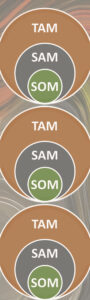











BONUS: Your Pitch Deck Is Already Built — Or It Should Be
If you’re seeking funding during the MARKET DEVELOPMENT Stage, welcome to VC territory. You’re here because this is a “Company” Stage and, VCs don’t invest in products — they invest in companies.
Your pitch is showing proof of execution, traction, and a team that can scale.
By this point, you’ve cycled through the 12 Success Dimensions three times — from Concept to Seed to Product Development. You’ve reworked, refined, and internalized them, and built the company through them.
If you’ve done it right — this IS your pitch deck.
It’s not something you slap together on the side. It’s the cleanest, clearest summary of the real work you’ve done — and exactly what will make investors lean in.
These 12 sections are your story:
- IS the Market worth it
- How you’ll win > Your Team
- Why you > Your Edge
- What problem you’re solving
- What you’ve built
- Proof your customers want it
- Your unique approach (teacher, trust builder or partner or.. – not just another product)
- How much can you profit
- What’s it going to cost
- How risky is it
This IS what matters.
All that’s left? Present it like a founder worth betting on.
Articles of Execution
You are launching — now do one final sweep.
Make sure every system, tool, and teammate is ready for prime time.
- Are operational systems reinforced and ready?
- Trial-mode tools upgraded to production-grade?
- Roles and ownerships clearly assigned?
- Have you stress-tested what might break — and prepped a fix?
Complete the checklist below like your launch depends on it — because it does.
You will break things when you go live. Your job is to quickly spot them and be prepared to fix them fast.
Expected Output:
- Launch checklist complete
- All 12 Dimensions updated and aligned
- All 10 Articles of Operation complete and tight
- Internal team reviews done
- Pitch deck + investor materials finalized
If not, your launch is a live grenade with a loose pin.

Optional Enhancements (for Market Leaders)
- Customer “Warning Signs” System – Tools that alert you early if customers are likely to cancel, so you can step in and keep them (Predictive churn and retention early-warning triggers).
- Three-Scenario Plan – A plan for three possible futures: normal results, better-than-expected results, and worse-than-expected results — each tied to when and how you’d spend more money (Three-case scenario plan — Base / Upside / Downside — tied to capital triggers).
- Multi-Channel Launch Playbook – Coordinating your sales and marketing across several platforms at the same time, while tracking which ones actually bring in customers (Multi-channel GTM orchestration with attribution modeling).
- 72-Hour “War Room” Plan – A clear action plan for the first three days after launch: who’s on call, what you’re watching on dashboards, and who gets to make which decisions fast (War Room protocol for the first 72 hours post-launch — on-call, dashboards, decision rights).