
2.X.3 Roles & Accountability
Who Owns What
The Leadership Team for the MVC
At Level 2, you’re no longer a loose crew grinding in the dark. You’re building your Minimum Viable Company (MVC) — and that requires structure. Not bloat. Not bureaucracy. Just clear roles, ownership, and accountability.
This is the stage where:
- Control is still centralized, but responsibility is expanding
- Team leads are being trained to own outcomes
- Senior management is learning servant leadership
- Everyone is learning to steer with data, not gut
This page helps you define who owns what, document it visibly, and align your team using either:
- A traditional PMI-style Org Chart
- An EOS-style Accountability Chart
You’ll also apply the powerful GWC lens from EOS:
- Do they Get it?
- Do they Want it?
- Are they Capable?
What You’re Actually Doing Here
You’re laying the foundation for:
- Distributed Authority (coming in Level 3)
- Clear ownership of metrics and deliverables
- Coaching leaders to take the wheel
Use this page to build role clarity, reinforce accountability, and keep everyone rowing in the same direction.
Org Chart vs. Accountability Chart
Two approaches. Same goal: clarity and accountability.
Approach #1
PMI-Style Org Chart
- Best when functions are centralized and reporting lines matter.
- Helps define teams, departments, and project escalation paths.
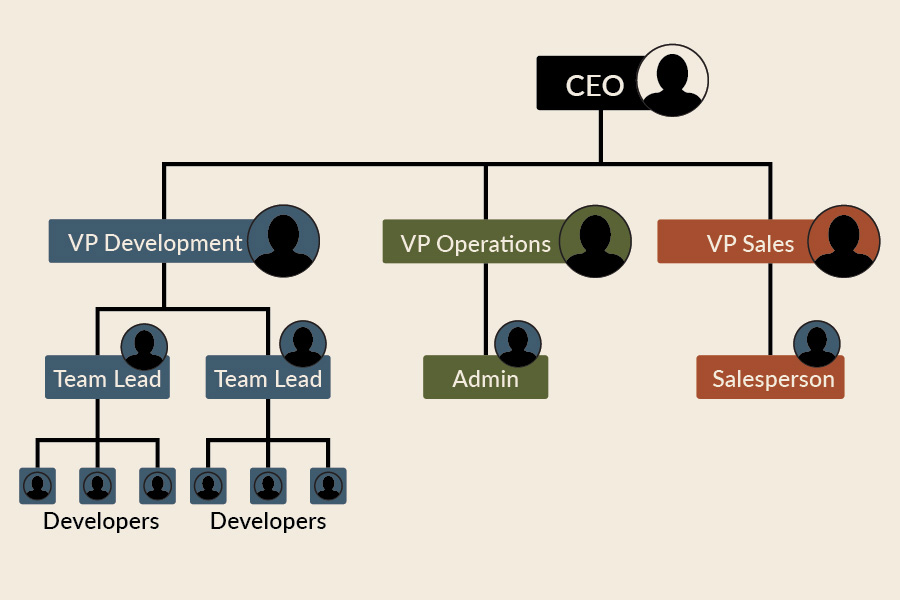
PMI-Style Organizational Chart (Execution + Control)
Use this when you want to clarify roles and reporting lines:Each box owns a functional area. Projects report into this structure, and RACI can be layered in:
- Responsible – Does the work
- Accountable – Owns the outcome
- Consulted – Provides input
- Informed – Needs updates
PMI Style Organizational Chart
 |
|---|
Approach #2
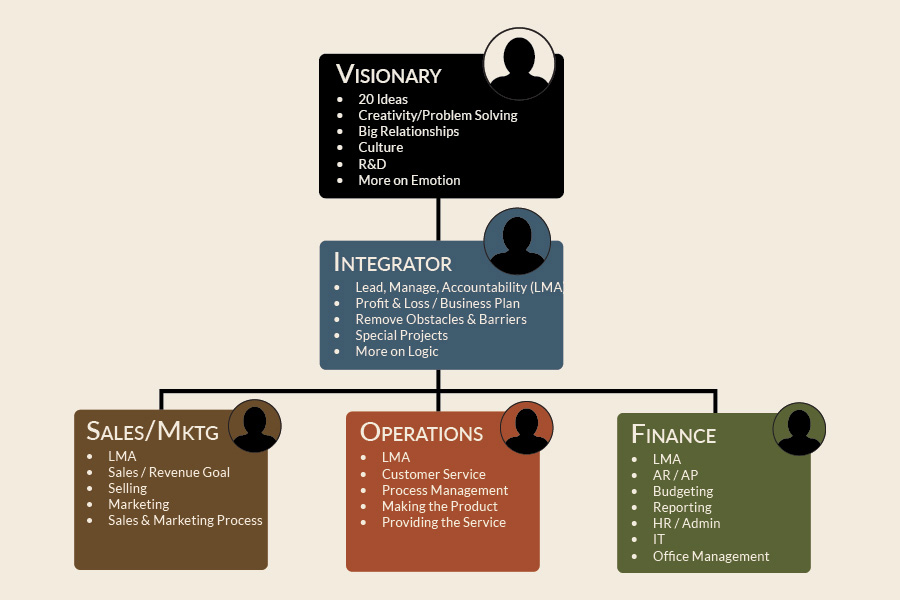
EOS Accountability Chart (Ownership + Fit)
EOS flips the focus: start with functions, then assign the right people.Each box owns a functional area. Projects report into this structure, and RACI can be layered in:
- Responsible – Does the work
- Accountable – Owns the outcome
- Consulted – Provides input
- Informed – Needs updates
One person can hold multiple seats — but every seat must be filled.
EOS Accountability Chart
 |
|---|
Organizational Chart Summary Comparison
| Feature | PMI Org Chart | EOS Accountability Chart |
|---|---|---|
| Foundation | Hierarchy & Teams | Functions & Ownership |
| Focus | Reporting structure | Outcomes & fit |
| Tools | RACI, job titles | GWC, scorecards |
| Best For | Central control, enterprise style | Startup agility, lean teams |
How to Use This in Your MVC Phase
- Sketch the key functions that must be owned
- Decide which format (PMI or EOS) best fits your culture
- Assign ONE owner per seat — avoid dual ownership
- Run the GWC filter:
- Do they Get it?
- Do they Want it?
- Are they Capable?
- Review quarterly — as the company grows, some team members won’t scale (and that’s okay)
This chart is your team’s navigation system.
Internal Governance Rhythm
At Level 2, you’re no longer just reacting — you’re running a company. And that means decisions need to flow through a consistent system.
“Good players pass the ball. Great players know where everyone will be before the ball arrives.” — Pep Guardiola
In a fast-moving team, alignment is everything. Governance isn’t about red tape — it’s about building clarity, cadence, and accountability into how the company operates.
Set a simple rhythm — weekly or biweekly — for:
- Financial & KPI Reviews
Align with dashboard owners to monitor health and trends
- Project Checkpoints
Review progress, surface blockers, and unlock decisions
- Strategic Discussions
Address resourcing, priority shifts, and customer-impacting issues
Assign clear roles:
- Facilitator – COO, project lead, or function head
- Agenda & Notes – Assigned owner ensures prep and capture
- Follow-Through – Confirm next steps and track accountability
Everyone knows what’s coming — and where to raise their hand.
no bottom line?
Bottom Line
info?