
5.X.1 Optimization for All
Keep on Scaling
What You’re Actually Doing Here
At Level 5, you’ve moved beyond basic structure and measurement — your company has reached operational maturity. You’re no longer building the machine — you’re tuning it. Continuously. Deliberately.
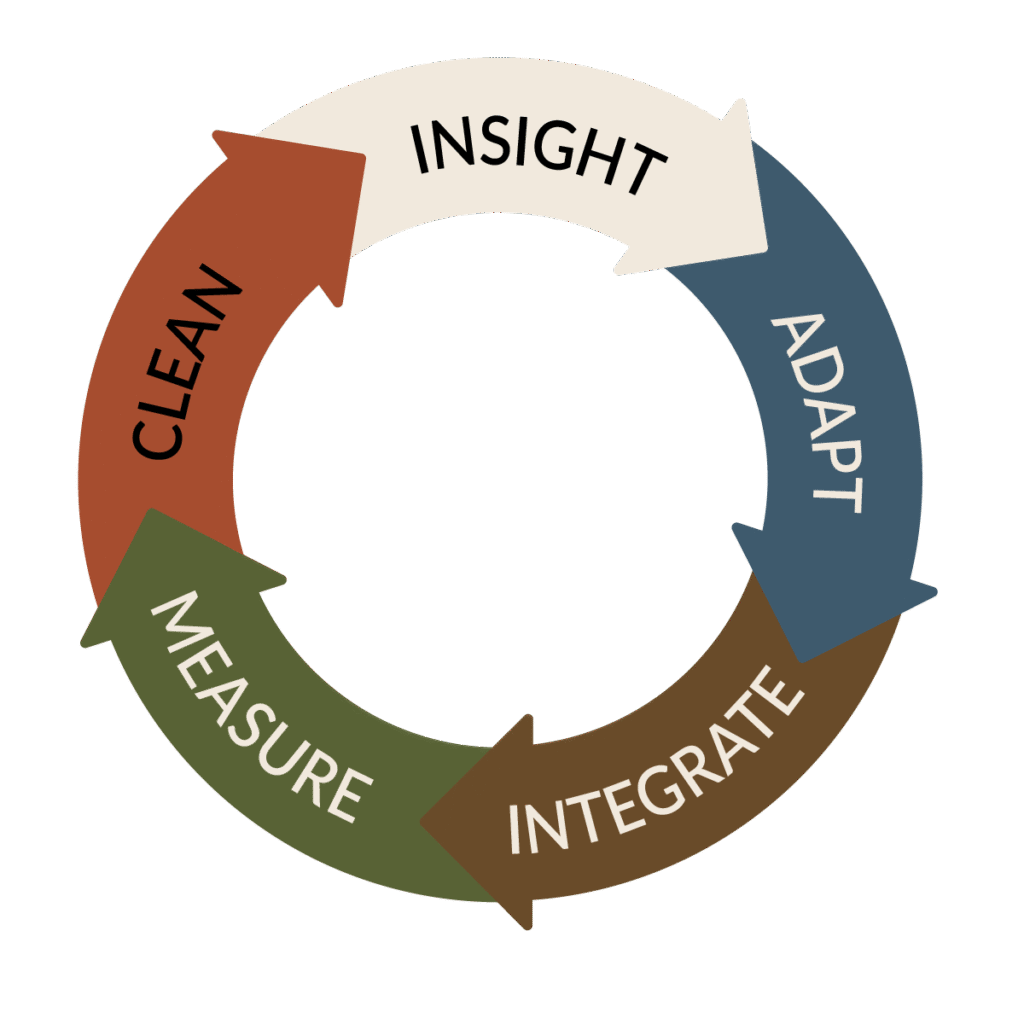
This section focuses on institutionalizing continuous improvement — turning every team into a self-improving system. Feedback, iteration, and optimization aren’t initiatives anymore — they’re habits.
You’re now:
- Scanning every process for optimization opportunities
- Prioritizing improvements by ROI and customer value
- Embedding repeatable tools for measurement, feedback, and refinement
- Training teams in how to improve — not just what to do
- Making optimization a cultural reflex, not a special project
Stability is an illusion.
Adaptation is survival. Optimization is how you grow.
1. Identify Critical Process Areas
Goal: Focus improvement efforts where they create the greatest value.
Use data, feedback, and experience to find:
- High-ROI bottlenecks
- Customer experience gaps
- Friction-heavy internal workflows
- Redundancies across departments
Tools:
- Process maps
- Feedback surveys (internal/external)
- Performance and variance dashboards
- Time studies or throughput tracking
Don’t fix what isn’t broken. Improve what matters — through the eyes of your customer.
2. Perform Gap Analysis
Goal: Know where you are — and what’s in the way of excellence.
For each targeted area:
- Establish baseline performance with current metrics
- Define “optimal” — what great looks like (quantified, not vague)
- Identify root causes of the gap
- Break findings down across people, process, and tools
Frameworks:
- Fishbone (Ishikawa) diagrams
- 5 Whys
- Voice of Customer (VOC) feedback
You can’t close the gap until you define both edges. Know where you stand — and why.
3. Prioritize Improvements
Goal: Sequence improvements by business impact.
Use:
- ROI Forecasts – Compare cost to expected savings or revenue
- Effort vs. Impact Matrices – Identify high-leverage, low-effort wins
- Risk mitigation urgency
- Customer urgency
Build a concise, high-leverage Improvement Backlog:
- Name of process
- Type of gap (cost, time, quality, experience)
- Expected impact
- Priority (MoSCoW or ICE score)
Optimization isn’t just fixing things — it’s choosing the right things to fix.
4. Tailor Solutions (Not Just Apply Templates)
Goal: Design improvements that fit your culture, stack, and stage.
- Customize SOPs based on real constraints
- Involve teams in co-designing solutions
- Pilot improvements at small scale before rolling out
- Use pilot programs with tight feedback loops
Best practice means nothing if it doesn’t work here, now, for your team.
5. Implement & Document the Change
Goal: Standardize improvements for repeatability.
- Update SOPs and workflows
- Communicate to all impacted stakeholders
- Train teams and assign new ownership
- Log version updates and improvement rationale
Tools:
- Notion SOP Library
- Change management checklist
- Slack/Email release notes
If it’s not documented and owned, it will vanish.
6. Measure the Outcome
Goal: Prove improvement happened.
Before-and-after metrics:
- Time-to-complete
- Error/rework rate
- Cost-per-transaction
- CSAT/NPS
- Financial impact (margin, revenue, cost reduction)
Tie results back to original gap and goal.
A change isn’t an improvement until it’s measured.
7. Create Continuous Feedback Loops
Goal: Make optimization ongoing and habitual.
- Add quarterly improvement reviews to BOS cadence
- Schedule quarterly retrospective workshops by department
- Encourage team-submitted improvement proposals
- Create a cross-functional Continuous Improvement council
Improvement is no longer a project. It’s part of how you operate.
Tools & Skills for Optimization
| Tool / Method | Purpose |
|---|---|
| PDCA Cycle | Iterative improvement |
| Lean / Six Sigma Tools | Root cause, waste reduction, process control |
| SPC (Statistical Process Control) | Detect signal vs noise |
| Cost of Quality (CoQ) | Understand cost of defects vs. prevention |
| Data visualization (PowerBI, Tableau) | Detect trends and patterns |
| Voice of Customer | Align improvements with real needs |
| Process Audits | Ensure adherence and improvement opportunities |
Optimization isn’t just doing more. It’s doing better with less friction and more focus.
Bottom Line:
Level 5 doesn’t mean perfection. It means **progress without pause.
You’re no longer chasing fire drills.
You’re identifying leverage.
You’re tuning a system that *already works* — and now works better every quarter.